


A competent combination of drug treatment and physiotherapy helps to effectively eliminate prostatitis.Physiotherapy can be done at home, just choose a device to treat prostatitis.Here, knowledge of the operational characteristics of various devices and their effects on the prostate will be useful.
Types of devices and their features
Physiotherapy is used as an auxiliary method in the treatment of chronic prostatitis.It has been proven that the combination of medications with physiotherapy accelerates the process of restoring the organ's function and helps to eliminate the disease quickly and effectively.Physiotherapy can be done not only in the hospital, but also at home.There are many devices for the treatment of prostatitis, with different principles of action.In order not to make a mistake when choosing a device for treating prostatitis, it is recommended to consult a doctor.
Home physical therapy can only be used to treat chronic or congestive prostatitis.Physiotherapy procedures are contraindicated in acute bacterial inflammation of the prostate, as they can be harmful to health.
All devices for prostatitis are divided into four groups according to the principle of influence.The therapeutic effect is achieved through:
- electrical stimulation;
- temperature exposure;
- light radiation (laser exposure);
- vibratory influence.
Devices for treating prostatitis can be purchased at any large pharmacy or medical equipment store.It is recommended to give preference to devices that have undergone medical control.
According to the type of use, such devices are transrectal and non-invasive.In the first case we are talking about a type of direct impact.These devices are equipped with special accessories that are inserted into the rectum, exerting an effect in the vicinity of the diseased organ.Non-invasive devices are equipped with electrodes or accessories that are placed on the lower back, lower abdomen, buttocks, or perineum.Such devices affect pelvic tissues and organs without direct contact with the prostate.
Choosing a device for home use is necessary according to several criteria:
- versatility of use;
- ease of use;
- security.
There are so-called universal devices that can be used to treat various diseases, not just prostatitis.Such a device will protect the health of the whole family, therefore it is the most preferable.However, universal physiotherapy devices often operate non-invasively, therefore they may be inferior in effectiveness to devices intended only for the treatment of prostate diseases.
Another important criterion is ease of operation.When purchasing a home physiotherapy device, a man wants to get the effect of a hospital procedure with a minimum of extra effort.An ideal household appliance does not require additional configuration or the participation of another person.
Perhaps the most important nuance worth paying attention to is the safety of using the device.A physiotherapy device should have a minimum of contraindications and side effects.In addition, it is important that the device is reliable, does not fail at the most inopportune moments and meets all electrical safety requirements.In this regard, it is recommended to give preference to high-quality devices that have passed multi-stage security controls before being delivered to stores.
Electrical stimulation devices
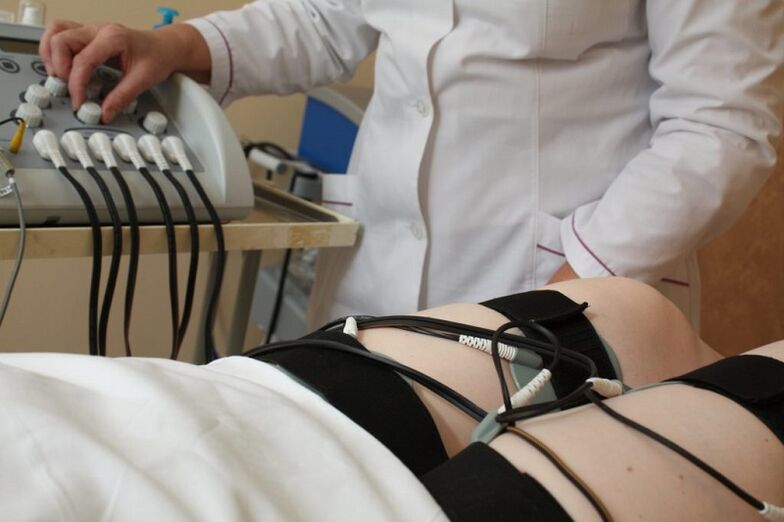
Exposure to a weak electrical current improves blood circulation and helps with congestive processes.
Electrical stimulation devices are widely used in physical therapy rooms.This group includes devices that generate alternating or direct current of low power, which has a stimulating effect on tissues.
Devices that generate electrical impulses can be invasive or non-invasive.
Among hospital devices, this type includes devices for electrophoresis, galvanotherapy, amplipulse and so on.
Properties of this device group:
- improvement of blood circulation in the affected area;
- lymphatic drainage effect;
- increasing the tone of the diseased organ.
Devices for electrical stimulation quickly reduce pain and relieve spasms of the bladder and urethra, thereby normalizing urination.Devices of this type are widely used in chronic prostatitis and in older men, as they increase the tone of the organ.Furthermore, electrical stimulation has a positive effect on potency.
Magnetic field generators
Magnetic therapy has been widely used to treat various diseases for more than half a century.Today, a magnetic therapy device can be easily purchased for home use.The main advantage of such magnetic field generators is their high safety of use.Magnetic therapy has a minimum of contraindications, but at the same time it has a pronounced therapeutic effect.The effectiveness of this effect in prostatitis is due to the gentle heating of the prostate tissue.
Although not everyone believes in the healing power of a constant or alternating magnetic field, the benefits of temperature exposure for chronic prostatitis are indisputable.The use of magnetic therapy helps to stimulate metabolic processes, improve the composition of prostate secretion and normalize its outflow during ejaculation.Additionally, gentle heating helps improve blood flow to the affected area.Devices of this type are invasive and non-invasive and are widely used as home physical therapy, so purchasing a device for home treatment is not difficult.
Vibration stimulators for prostatitis
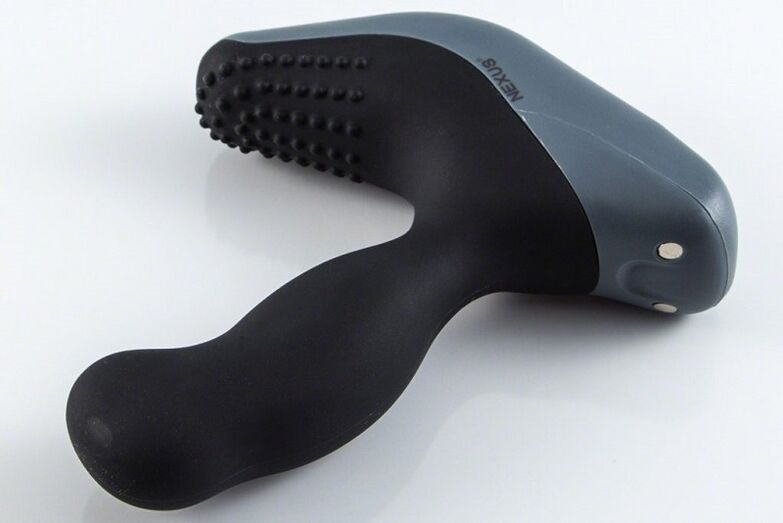
Recommended for all men who lead a sedentary lifestyle to prevent prostatitis.
In congestive prostatitis, there is swelling of the prostate and thickening of the secretion in the lobes of the gland.As a result, the inflammatory process begins and local blood flow worsens.The natural consequence of such a disturbance in the functioning of the prostate is impotence.To get rid of inflammation, it is necessary to normalize metabolic processes and tissue trophism, and here vibration stimulators come to the rescue.
These devices for treating prostatitis at home become an excellent alternative to prostate massage performed by a urologist.The effectiveness of devices of this type is based on the mechanical effect on prostate tissue.
Vibration stimulators can be used for both treatment and prevention.A prostate massager that works on the principle of a vibrating stimulator is recommended for all men over 40 to prevent the development of congestive prostatitis.It is also recommended that men with irregular sex life, sedentary work and overweight pay attention to such a simple device.
Ultrasound Therapy
The effect of ultrasound on prostate tissue is in many ways similar to the effect of vibratory stimulation, but this effect is softer.These devices create sound vibrations and have a gentle temperature effect.The main advantage of ultrasound physiotherapy at home is the compact size of the device itself.Furthermore, ultrasound therapy is quite safe and has fewer contraindications than electrical stimulation or vibration.
laser devices
Laser therapy devices are much less common than other devices for home physical therapy.They are a small rectangular device with a nozzle for insertion into the rectum.
Laser treatment is indicated for severe pain.This effect accelerates the restoration of prostate tissue, is indicated for congestive and chronic prostatitis and can also be used for erectile dysfunction.
Contraindications and precautions

The use of this type of device is not recommended for people with heart problems.
Before purchasing a home device for treating prostatitis, you should consult your doctor.These devices can only be used for chronic prostate inflammation.Physiotherapy for acute inflammation is contraindicated.This is explained by the fact that all these devices improve metabolic processes and stimulate local blood flow.If there is a focus of infection, such stimulation may be unsafe, since pathogens are transported in the blood throughout the body, infecting nearby organs and systems.In particularly serious cases, for example with prostate abscess, physiotherapy can cause the development of sepsis if pyogenic bacteria penetrate the blood in large quantities.
Main contraindications for physiotherapy:
- acute infectious process;
- prostatic tuberculosis;
- diabetes mellitus;
- venous pathologies;
- serious cardiovascular diseases;
- use a pacemaker;
- prostate stones;
- urolithiasis;
- Cancer.
Transrectal devices should not be used for inflammation of the rectum, exacerbation of hemorrhoids, or rectal cancer.
Important!The physiotherapy session should be rescheduled in case of general malaise, fever or acute respiratory viral infection.
If, after a physiotherapy session, symptoms worsen, pain and itching appear, you should stop self-medication and consult a doctor.
Popular devices for home use
There are many devices for home physical therapy.It is easy to get confused by their wide range, so it is recommended that you familiarize yourself with the characteristics and features of different devices before purchasing.It is best to consult your doctor, who will not only recommend a specific model, but also teach you how to use the device correctly.
Transrectal vibrating massagers
Before using any device, you must carefully read the instructions
These devices for the treatment of prostatitis work on the principle of transrectal vibrating massage.Indications for use:
- congestive prostatitis;
- early stage prostate adenoma;
- erectile dysfunction.
The vibrating massager simultaneously produces mechanical, thermal and electromagnetic effects, therefore it can be safely called a universal device for the treatment of prostatitis.
Electromagnetic emitters
These devices heat prostate tissue thanks to the generated magnetic field and improve metabolic processes through electrical stimulation.
Device Properties:
- promote the outflow of blood from the inflamed organ;
- lymphatic drainage effect;
- dilate blood vessels;
- restore the tissue.
Wearing devices helps relieve pain, improve the urination process, and reduce swelling of prostate tissue.The devices dilate blood vessels, thus helping to improve erection.
Magnetic Therapy Device
Magnetic therapy devices intended for the treatment of joints and diseases of the genitourinary system.The devices generate a magnetic field that improves blood circulation and metabolic processes.The devices are equipped with a four-magnet belt that must be placed on the painful area.In the treatment of prostatitis, magnets are applied to the lower back, perineum, lower abdomen and buttocks.
Electromyostimulator devices
These are devices recommended for home use.The devices work on the principle of electrical stimulation;Special glass accessories are used as electrode.The devices are universal and are used in the treatment and prevention of various diseases, including prostatitis.Furthermore, the devices can also be used to solve cosmetic problems, for example, premature aging, dry skin, brittle hair.
The devices are equipped with removable accessories;in the treatment of prostatitis, a mushroom-shaped electrode is used, which is applied to the perineum.You can also purchase a nozzle for transrectal prostate treatment separately.
Laser Therapy Devices
These are devices used at home.The devices are universal and can be used to treat various diseases of the musculoskeletal system, gastrointestinal tract and genitourinary system.Widely used in dermatology and otorhinolaryngology, and can be used by the whole family.
The devices are small and equipped with various accessories, including a combined one, which simultaneously provides laser and magnetic effects on the tissue.The devices are recommended for use in chronic congestive prostatitis to accelerate tissue recovery of the inflamed organ.
Before you start treating prostatitis with a physical therapy device at home, you should consult your doctor.Some types of physical therapy can be used in conjunction with medications, and a specialist will help you choose an effective combination therapy.